Skip to content
🪨 Stone Manuscripts (Inscriptions)
1. Introduction
- Before palm leaf and paper, stone was the primary medium to preserve royal decrees, land grants, religious texts, and cultural records.
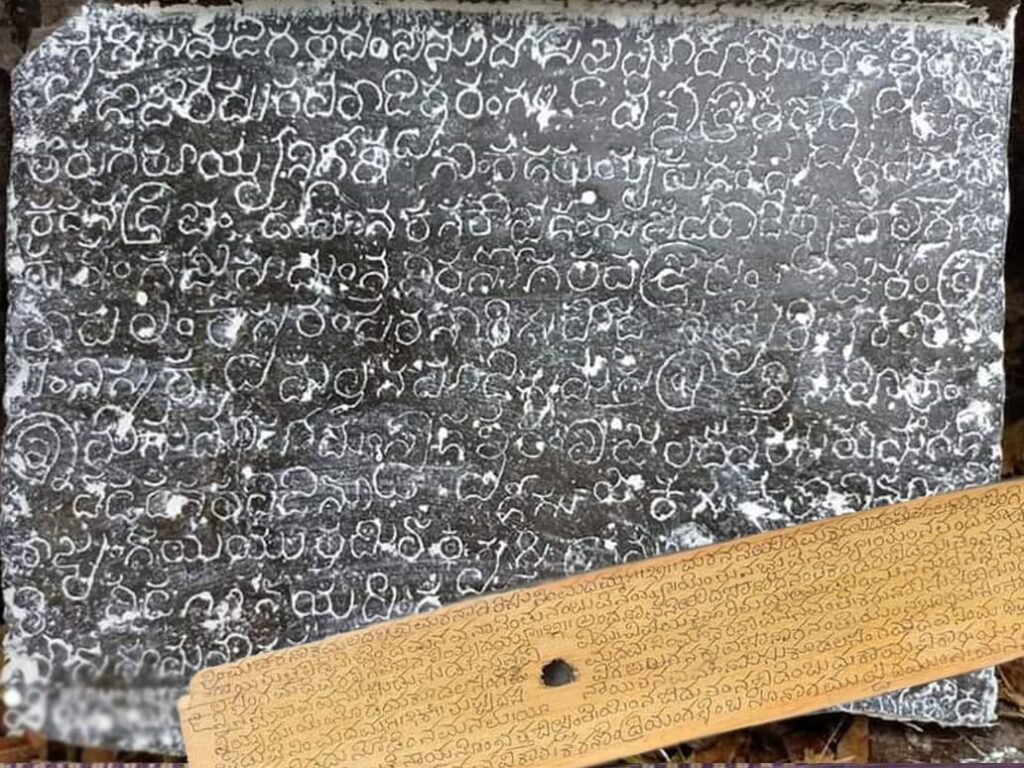
- These are called Shilashasana (ಶಿಲಾಶಾಸನ) in Kannada, meaning stone inscription.
- Written by engraving letters using chisels on stone slabs, temple walls, pillars, and rocks.
- Most inscriptions are in Prakrit, Sanskrit, and Kannada, depending on the period.
2. Purpose of Stone Manuscripts
- Royal edicts: Laws, administrative orders, tax rules.
- Land grants: Donations to temples, Brahmins, and monasteries.
- Religious records: Temple constructions, endowments, rituals.
- Victories & wars: Military achievements of kings.
- Social & cultural life: Guild activities, festivals, village administration.
3. Stone Manuscripts in India
- Mauryan Period (3rd century BCE):
- Ashoka’s Rock Edicts and Pillar Edicts in Prakrit (Brahmi script).
- Spread Buddhist moral code (Dhamma).
- Gupta Period (4th–6th century CE):
- Sanskrit inscriptions, mostly eulogies and grants.
- Medieval India:
- Rajput, Chola, Vijayanagara, and Mughal inscriptions.
- Often bilingual/multilingual (Sanskrit + regional language).
4. Stone Manuscripts in Karnataka
- Karnataka is known as the land of inscriptions, with more than 25,000 inscriptions found (one of the richest in India).
- Earliest: Halmidi Inscription (c. 450 CE) – first full Kannada inscription, in Halegannada.
- Dynasties and examples:
- Kadambas (4th–6th c. CE): Early Kannada and Sanskrit inscriptions.
- Chalukyas (6th–8th c. CE): Aihole and Badami inscriptions; records of temple constructions.
- Rashtrakutas (8th–10th c. CE): Kannada-Sanskrit inscriptions praising kings.
- Hoysalas (11th–14th c. CE): Rich in temple grants; Belur and Halebidu temples have stone manuscripts.
- Vijayanagara Empire (14th–16th c. CE): Multilingual inscriptions (Kannada, Telugu, Tamil, Sanskrit).
- Languages: Halegannada, Sanskrit (Nagari/Grantha), later Persian-Arabic (Bahmani & Adil Shahi rule).
5. Features of Stone Manuscripts
- Engraved on:
- Temple walls & pillars (e.g., Virupaksha temple at Pattadakal).
- Hero stones (Veeragallu, वीरगल्लು / ವೀರಗಲ್ಲು): Memorials for warriors.
- Sati stones: In memory of women who performed sati.
- Durable: Many survive even after 1,500 years.
- Artistic: Some have carvings, borders, and deity images.
6. Preservation & Study
- Preserved in original temple sites, museums, and archaeological collections.
- Studied through Epigraphy (the science of inscriptions).
- Epigraphia Carnatica – monumental work by B. L. Rice (19th century) compiling Karnataka inscriptions.
- Today, digital epigraphy projects are scanning inscriptions for long-term access.
7. Importance of Stone Manuscripts
- Provide authentic historical evidence (dates, dynasties, language evolution).
- Showcase growth of Kannada from Halegannada to Hosa Kannada.
- Preserve details of social structure, economy, and cultural practices.
- Complement literary sources by giving factual, dated information.