📜 Palm Leaf Manuscripts
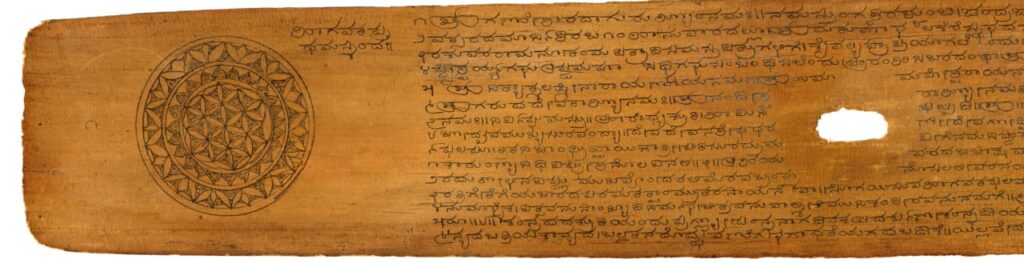
1. What are Palm Leaf Manuscripts?
- Palm leaf manuscripts are handwritten texts inscribed on dried palm leaves.
- Two types of palm leaves used:
- Tala (Borassus flabellifer) – common in South India.
- Olai (Corypha umbraculifera) – more durable, used in Sri Lanka & Tamil regions.
- Writing was done using a metal stylus on the leaf surface, then rubbed with ink/charcoal powder to make letters visible.
- These manuscripts were preserved by oiling (with neem/turmeric) and wrapping in cloth.
2. Palm Leaf Tradition in India
- Used from 5th century BCE until the 19th century CE, before paper became common.
- Found across South Asia: India, Nepal, Sri Lanka, Burma, Thailand, Indonesia.
- Languages: Sanskrit, Pali, Prakrit, Kannada, Tamil, Telugu, Malayalam, Odia, etc.
- Subjects:
- Religion (Vedas, Upanishads, Puranas, Jain Agamas, Buddhist Tripitakas).
- Literature (epics like Ramayana, Mahabharata).
- Science (astronomy, medicine, mathematics, architecture).
3. Palm Leaf Manuscripts in Karnataka
- Karnataka has rich collections of palm leaf manuscripts in Kannada, Sanskrit, and Prakrit.
- Centers:
- Sringeri Sharada Peetha – Vedantic texts.
- Shravanabelagola – Jain manuscripts.
- Mysore Oriental Research Institute (MORI) – vast collection of Sanskrit & Kannada works.
- Kamataka State Archives and Universities preserve digitized manuscripts.
- Kannada texts found:
- Early Vachana literature.
- Jain classics.
- Medical texts in Halegannada (Old Kannada).
- Inscriptions on palm leaves show administrative records (land grants, temple donations).
4. Preservation Issues
- Palm leaves are fragile: prone to insects, fungi, humidity damage.
- Manuscripts require periodic recopying every 50–100 years.
- Now, many are being digitized using OCR, multispectral imaging, and databases (ex: National Mission for Manuscripts, Govt. of India).
5. Significance of Palm Leaf Manuscripts
- Primary source of ancient history & culture.
- Record of knowledge transmission for centuries before printing.
- Show evolution of Kannada script from Halegannada to modern form.
- Basis for research in epigraphy, paleography, linguistics, and literature.
6. Famous Examples from Karnataka
-
- Dhavala and Jayadhavala texts (Jain, 9th century).
- Manasollasa of Someshwara III (12th century) – encyclopedia on arts, politics, food.
- Medieval Kannada works like Kavirajamarga and Vachana sahitya