Skip to content
⚒️ Copper, Silver, and Other Metal Manuscripts
1. Introduction
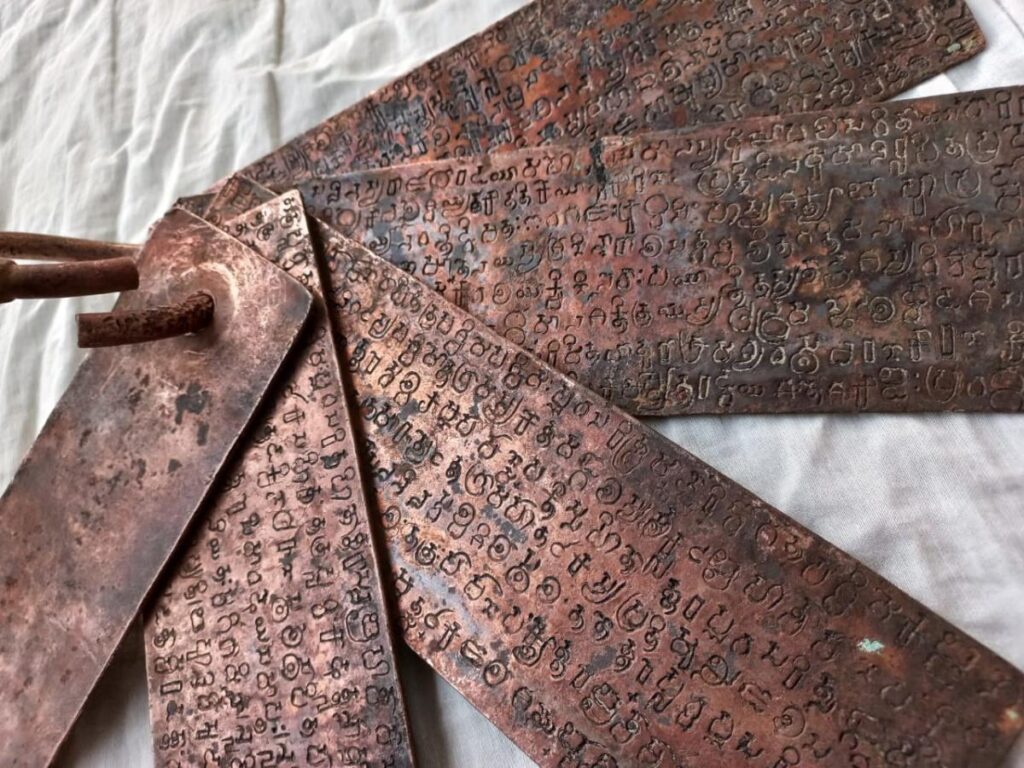
- Metal plates were used when rulers wanted to issue permanent, official records like land grants, royal orders, or charters.
- Copper plates were most common (abundant, durable, easy to engrave).
- Silver and gold plates were used only for very important grants or as symbols of royal prestige.
2. Features of Metal Manuscripts
- Shape: Usually rectangular, sometimes with rounded edges.
- Binding: Several plates tied together with a ring (often sealed with the king’s emblem).
- Script: Engraved using sharp tools, typically in Brahmi, Nagari, Halegannada, Sanskrit, or regional scripts.
- Durability: Lasts centuries, much longer than palm-leaf or paper.
3. Copper Plate Manuscripts in India
- Gupta Empire (4th–6th CE): Famous for land grant charters in Sanskrit.
- Pallavas (6th–9th CE): Numerous copper plates in Tamil Nadu with grants to Brahmins and temples.
- Cholas (9th–13th CE): Detailed copper records of village administration and temple endowments.
- Mughals: Issued farmāns (royal orders) sometimes on copper, though more on paper.
4. Copper Plate Manuscripts in Karnataka
- Karnataka is rich in copper-plate records, often bilingual (Sanskrit + Kannada).
- Examples:
- Talasiga Copper Plates (c. 6th CE): Early Kannada-Sanskrit inscription from Kadamba dynasty.
- Alupa dynasty copper plates (Mangalore region): Grants in Halegannada.
- Chalukya and Rashtrakuta plates: Issued land to Brahmins, temples, and mathas.
- Hoysalas and Vijayanagara Empire: Many preserved copper-plate charters (often with lion/boar emblem seals).
5. Silver & Gold Manuscripts
- Rare and Royal:
- Silver plates were occasionally issued by wealthy kings to signify prestige.
- Gold plates extremely rare – often ceremonial (gift to temples, divine inscriptions).
- Example:
- Vijayanagara rulers and some Mysore Wodeyars gifted silver/gold-engraved grants to temples.
- Some Jain institutions in Karnataka preserved silver-plate grants.
6. Importance of Metal Manuscripts
- Authenticity: Royal seal = unquestionable authority.
- Permanent Records: Land ownership, taxation, and endowments preserved for centuries.
- Cultural Insight: Contain genealogies of kings, lists of donors, village administration details.
- Language Development: Early Kannada found in copper plates, showing linguistic evolution.
7. Preservation & Study
- Many are preserved in:
- Karnataka State Archives (Bengaluru)
- Museums (Mysore, Chennai, Delhi, etc.)
- Epigraphia Carnatica volumes (B. L. Rice documented hundreds).
- Today, scanned and digitized for researchers.